News and Highlights
Discover What’s New in Biology at SCSU
Stay connected with the vibrant Biology community at St. Cloud State University. Here, we celebrate the achievements of our students, alumni, and faculty, showcase groundbreaking research, and highlight participation in national and international scientific gatherings. From innovative publications and award-winning presentations to TEDx talks and collaborative conferences, this page offers a dynamic glimpse into the impactful work and academic excellence that define us.
Recent Highlights
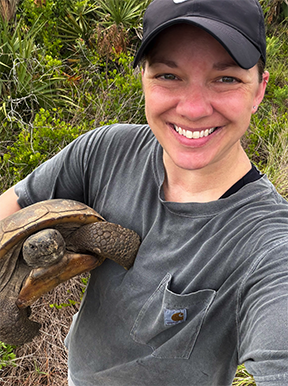
The SCSU Biology program is excited to welcome Dr. Kaitlyn Holden as its newest faculty member!
Dr. Holden is a broadly trained biologist whose research explores comparative ecophysiology and the evolutionary ecology of life histories. Her work examines how animals respond to environmental challenges and how those responses influence development, physiology, reproduction, and survival. Much of her research has focused on garter snakes as model organisms.
Dr. Holden earned her B.S. in Biology from the University of Wisconsin–Eau Claire, her M.S. in Biology from the University of Texas at Tyler, and her Ph.D. in Ecology and Evolutionary Biology from Iowa State University. She brings experience in field and laboratory work, eco-physiological and senescence research, and opportunities for student mentorship across disciplines in the department.
Her expertise complements SCSU’s strengths in ecology, evolution, physiology, and hands-on student research. We are excited for the opportunities she will create for students in the classroom, laboratory, and field.
Please join us in welcoming Dr. Holden to the SCSU Biology community!
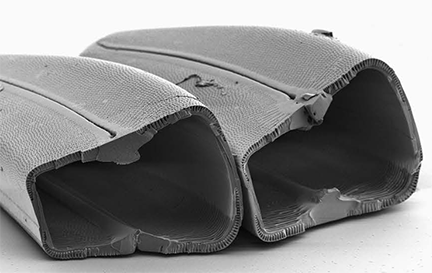
A new research study by Dr. Matt Julius and collaborators outlines a protocol that makes it easier for scientists to explore the hidden architecture of diatoms, which are microscopic algae that support aquatic ecosystems. By offering a practical and accessible way to prepare diatom shells for detailed imaging, the protocols proposed in this study have the potential to advance studies of diatom biology, classification, and allow for a new look at their remarkable silica structures.
Mayama, N., Mayama, S., and Julius, M.L. (2026). A practical guide to freeze-cleavage of diatom frustules for SEM observation:Detailed protocol, tips, and applications, Diatom, 2026, Volume 42, Pages 4-10. https://doi.org/10.11464/diatom.42.4
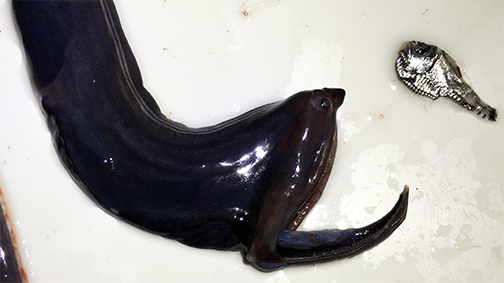
A new study co-authored by SCSU Biology’s Dr. Matthew Davis reveals that pelican and swallower eels produce light using their own cells. The team also described the pelican eel’s tail light organ internally for the first time, finding muscular grooves that may enable flashing or blinking. Their evolutionary analysis suggests this ability arose once in the common ancestor of these remarkable eels!
Ghedotti M.J., Gonzalez F.M., Riggin K.L., Agudo K.C., Davis M.P., Smith W.L., and Frable, B.W. (2026) Anatomy and Evolution of Bioluminescent Organs in the Gulper Eels (Anguilliformes: Saccopharyngoidea). Ichthyology & Herpetology. Sep;114(3):461–473. doi:10.1643/i2025070
SCSU Biology Alum Alex Maile (Biology: Biodiversity, Ecology, and Evolution, BS; Biological Sciences, MS) and faculty Dr. Matt Davis are authors on a recent publication in the journal Ichthyology and Herpetology that investigates the comparative morphology and evolution of the lure system in anglerfishes. This study is open access.
Maile, A.J., and Davis, M.P. (2026). The Evolution of Lures in Anglerfishes (Acanthuriformes: Lophioidei): Investigating Nature’s Tackle Box. Ichthyology & Herpetology. Mar;114(1):103–118. DOI: 10.1643/i2025018
Popular Press
-
Stokstad, E. Science. Why do anglerfish have glowing lures? It might be sex.
-
Golembiewski, K. New York Times. How Female Anglerfishes Evolved to Have it All.
-
Brown, T.M. National Geographic. Inside the extremely bizarre sex lives of anglerfish.
-
Kuta, S. Smithsonian Magazine. Anglerfish Are Known for Their Built-in Fishing Rods. New Research Sheds Light on How These Lures Evolved in the Strange Creatures.
-
Graham, F. Nature: Daily Briefing. Anglerfishes’ glow helped them hook up.
-
McCall, R. Discover Magazine. Peculiar-Looking Anglerfishes Developed Their Fishing-Rod Lure 72 Million Years Ago.
-
Hobson, M. BBC Wildlife Magazine. This curious creature has a fishing rod dangling out of its head. It doesn't just use it for hunting…
-
Lynch, B. KU News. Research traces evolution of anglerfishes’ famed fishing-rod lures.
-
Baum, S. PHYS ORG. Research traces evolution of anglerfishes’ famed fishing-rod lures.

SCSU Faculty Dr. Jennifer Lamb and Dr. Matthew Davis are authors on a publication in Ichthyology and Herpetology exploring glowing salamanders in their early-life history. This publication was recently awarded the "Best Paper in Herpetology" for 2025 in the journal Ichthyology and Herpetology by the American Society of Ichthyologists and Herpetologists at the Joint Meeting of Ichthyologists and Herpetologists (New Orleans, July 2026).
Read all about the award in St. Cloud State Today and St. Cloud Live.
Lamb, J.Y., Cooper, H., Seymour, A., Davis, M.P., and Beaty, L. (2025). Illuminating the Early Life of Salamanders: Exploring Biofluorescence During Development. Ichthyology & Herpetology, 113(1):104-116. https://doi.org/10.1643/h2024080

SCSU Faculty Dr. Matthew Julius is a co-author on a published study in the journal Hydrobiologia that explores how likely microscopic aquatic organisms are to establish and spread after being released in ballast water from ships. By identifying the minimum number of cells needed for successful invasion, the study provides valuable insights that can help improve ballast water regulations and protect the Great Lakes from future invasive species.
Read all about it in the publication below!
SCSU Biology Alum Hans Addo (Biological Sciences, MS) and faculty Dr. Marina Cetkovic-Cvrlje are authors on a recent publication in the journal Diabetology that investigates the impact exercise has on Type 1 Diabetes.
Cetkovic-Cvrlje, M., Addo, H., Nimer, M.A., Chan, S.S.K., and Le-Chan, G. (2026). Voluntary Exercise Delays Type 1 Diabetes Onset Independent of Splenic T Cell Subsets and Inflammatory Cytokines in NOD Mice. Diabetology, 7(4), 64; https://doi.org/10.3390/diabetology7040064
SCSU Biology students mentored by Dr. Angela McDonnell have been developing a new variety of tomato with distinctive patterning. Learn all about the development of the SCSU "Husky Tomato" in collaboration with the SCSU Community Garden and Biology Greenhouse facilities here at SCSU Today and the Minnesota Star Tribune!

SCSU Biology Alum Emily DeArmon (Biological Sciences, MS) and faculty Dr. Matt Davis are authors on a recent publication in the journal Zootaxa that revises and examines the classification and tree-of-life for deep-sea dragonfishes. This study is open access.
DeArmon, E.S., Smith, W.L., and Davis, M.P. (2026). Dragons of the deep (Stomiiformes: Stomiidae): Evolutionary relationships and taxonomy of the barbeled dragonfishes (Stomiinae) and viperfishes (Chauliodontinae). Zootaxa. DOI: 10.11646/zootaxa.5759.1.1

SCSU Biology faculty Dr. Matthew Julius is an author on a recent publication in the journal Algal Research that investigates how algae can be used for the development of bioactive glass.
Enobong R.E, Victor A.A, David A.F, Ngozi A.A, Violette N.A, Taofikat A.A., Luqman A.A, and Julius, M.L. (2026). Algal biogenic synthesis of SiO2–CaO–P2O5 system bioactive glass using Cyclotella meneghinianaand waste fish bone. Algal Research, https://doi.org/10.1016/j.algal.2026.104579

SCSU Biology Alum Zachary May (Biological Sciences, MS) and faculty Dr. Matt Davis are authors on a recent publication in the journal Zootaxa that investigates the tree-of-life for deep-sea hatchetfishes. This study is open access.
May, Z.A., Smith, W.L., and Davis, M.P. (2026). The evolutionary relationships of marine hatchetfishes (Stomiiformes: Sternoptychidae) based on genomic and morphological data. Zootaxa. DOI: 10.11646/zootaxa.5757.5.3

Students and faculty in biology presented their work at the joint meeting of the Minnesota Wildlife Society and the Minnesota Chapter of the American Fisheries Society in Duluth (MN) in February 2026. Biological Sciences graduate students Sam Skinner and Kerri Beers gave oral presentations on their work with Dr. Jennifer Lamb on amphibian conservation in Minnesota, and Biology faculty Dr. Matthew Davis also gave an oral presentation of relationships among North American fishes.


Dr. Bill Cook was the recipient of the Cordes' Award from the WJON Radio Station for his frequent insight and participation in "The Garden Corner" on WJON. You can listen to Dr. Cook talk about plants throughout the region on Wednesday's from 11 a.m. to noon CST.

Biological Sciences graduate student Adam Dingmann (Advisor Dr. Matthew Julius) presented the results of his master's thesis work at the Annual British Phycological Society meeting in Aberystwyth (January 2026). His oral presentation was titled "Variation in Lotic Parameters and it Influence in Structuring Stalk Forming Diatom Communities".

The Lakes Aquarium Club's Aquatic Swap was held at St. Cloud State University on Oct. 12, 2025. The swap provided support for small business and allowed local communities to learn more about aquatic vertebrates, plants, and algae. The gathering included a symposium by Dr. Matt Julius on algae as a nutrious source and Dr. Matt Davis on bioluminescence and biofluorescence in aquatic biodiversity. The event was also co-organized with the SCSU student club The Into the Wild Society.


Dr. Matt Julius is a co-author on a recent publication in the Asian Journal of Biology Education investigating how a diatom-based education computer program can raise environmental awareness among students. This computer program, SimRiver, is used in introductory biology courses at SCSU.
Fostering Students’ Awareness and Attitudes toward River Environments: Development of a Diatom-Based Educational Program.Three SCSU students presented independent research at the international Botany conference, a joint meeting of six professional societies at which there were over 1,000 attendees, in Palm Springs, California. AnnElise Swanson, Kendall Cross, and Sam Hennemann each gave presentations about the development of a black and red Husky tomato, conservation biology of a rare sunflower in Minnesota, and movement of invasive grasses in Minnesota, respectively.
Kendall Cross was recognized with the Young Botanist Award, given by the Botanical Society of America, which recognizes outstanding accomplishments in the plant sciences. He also received the Undergraduate Research Prize, given by the American Society of Plant Taxonomists, in recognition of outstanding research in plant systematics. The awards are the highest honors for undergraduates from both societies.
Biology and Chemistry faculty Dr. Matthew Davis and Dr. Jennifer Lamb, and Atmospheric and Earth Sciences faculty Dr. Sarah Gibson were local hosts of the Joint Meeting of Ichthyologists and Herpetologists held in St. Paul (MN) in July 2025. The event had approximately 700 participants from around the world presenting their work studying fishes, amphibians, and reptiles.
Six SCSU students presented oral and poster presentations at the meeting. Biological Sciences graduate student Spencer Ott (Graduate Advisor Dr. Sarah Gibson) was the recipient of the Storer Award for Best Poster in Ichthyology. SCSU Biological sciences student Elizabeth Favor was the recipient of a Raney Award for her research from the American Society of Ichthyologists and Herpetologists. Congratulations to Spencer and Elizabeth!

SCSU alum Alex Maile (Biology: Biodiversity, Ecology, and Evolution B.S. and Biological Sciences M.S.) and Dr. Matthew Davis are authors on a recent publication in PLOS One exploring the evolution of deep-sea anglerfishes from a total evidence perspective that includes novel insights into the classification of the group. This work was part of Alex Maile' thesis work at SCSU.

Dr. Angela McDonnell is a co-author of a publication in the journal Nature which revises the tree-of-life for all flowering plants. The work represents an international, phylogenomic effort to shed new light on the evolutionary history of flowering plants and their rise to ecological dominance on Earth. You can find the open access article, Phylogenomics and the Rise of Angiosperms, as well as the St. Cloud State Today article.

Biology Discoveries in the Media
A study by SCSU alum Alex Maile and SCSU Faculty Matthew Davis on the evolution and morphology of anglerfish lures was featured in Science, The New York Times, and National Geographic. Follow the links below to read the Science, The New York Times, and National Geographic features on this study that was conducted at SCSU.
-
Stokstad, E. Science. Why do anglerfish have glowing lures? It might be sex.
-
Golembiewski, K. New York Times. How Female Anglerfishes Evolved to Have it All.
-
Brown, T.M. National Geographic. Inside the extremely bizarre sex lives of anglerfish.
- Maile, A.J., and Davis, M.P. (2026). The Evolution of Lures in Anglerfishes (Acanthuriformes: Lophioidei): Investigating Nature’s Tackle Box. Ichthyology & Herpetology. Mar;114(1):103–118. DOI: 10.1643/i2025018
SCSU faculty Dr. Heiko Schoenfuss' work on waterfall climbing gobies in Hawaii was recently featured in the PBS show Nature on Season 44, episode 7 "Freshwater: Parenthood". Dr. Schoenfuss served as a scientific consultant for the episode. The segment focused on hawaiian gobies begins approximately at minute 32. You can watch the full episdoe here.

SCSU Faculty Dr. Jennifer Lamb and Dr. Matthew Davis' work on biofluorescence in vertebrates was highlighted in the Netflix Documentary "Our Living World" in Episode 2 "The Rhythm of Life". The segment on biofluorescence in salamanders begins around minute 23 in the episode. Dr. Lamb and Dr. Davis served as scientific consultants for the episode.
To read more about the documentary, check out the stories from the St. Cloud Times and St. Cloud Live.

Alumni Highlights
Congratulations to Dr. Rene Martin (B.S. Biology: Biodiversity, Ecology 2014, and Evolution; M.S. Biological Sciences 2017) on being awarded the 2025 Graduate of the Last Decade (GOLD) Alumni Award.
Bree Barney ’05, a biology graduate of St. Cloud State University, has worked at multiple Zoos across the country, including helping to bring the wonders of Australia to thousands of visitors as a zookeeper at the San Diego Zoo Safari Park’s Walkabout Australia exhibit. Barney oversaw the immersive, barrier-free habitat—home to kangaroos, wallabies, cassowaries, and endangered Matschie’s tree kangaroos—ensuring the animals’ wellbeing while educating guests experiencing these species up close, many for the first time. She described the exhibit’s opening to record crowds as “an A+ moment,” and says contributing to international conservation efforts is a dream come true. After gaining experience at Como Park Zoo and drawing on the scientific skills she developed at St. Cloud State, Barney now enjoys a career she calls surreal: “I’ve never woken up and thought, ‘I don’t want to be a zookeeper today.’” Barney currently works at the Minnesota Zoo as the Curator of the Tropical and MN Trail exhibits.

Learn more about Bree's journey in this St. Cloud State Today story.
TEDx Presentations
"The Glowing Creatures Hidden in Your Backyard" with Drs. Matthew Davis and Jennifer Lamb
"A Type 1 Diabetes Researcher's Lifelong Quest" with Dr. Marina Cetkovic-Cvrlje
"What do Algae Have to do with Public Funding of Research?" with Dr. Matt Julius