Miller Scholars Award
Becoming a Miller Scholar
The Miller Scholar Award was established by the generous donation of James W. and Marion Miller. The award is a joint effort of CETL, Office of Academic Affairs and St. Cloud State University Foundation.
To become a Miller Scholar, a faculty member proposes and implements a project that enhances student learning and takes a track record in teaching and learning to a significantly higher level. Miller Scholars receive:
- A certificate of recognition from the President of St. Cloud State
- A grant to implement a student-success project within the Scholarship of Teaching and Learning framework
Access and download the application packet on the CETL SharePoint site. All completed applications are due by Friday, February 20, 2026 by 11:59 pm.
2026-27 Miller Scholar Award
Miller Scholar Award Details
- Applicants must be St Cloud State University tenured or tenure-track faculty (note: the project may be completed individually or with a team of peer or student collaborators)
- The proposed project will take the applicant’s demonstrated track record in teaching and learning to a significantly higher level.
- A budget of up to $10,000 is available for project implementation (exact amount subject to confirmation by SCSU University Foundation)
- The project will be implemented during 2026-27 (FY 27)
- Awardees are expected to make their work public.
- The budget must include funds to present the project outcomes.
- The awardees will also present their results at the Spring 2027 SCSU’s Provost Summit or Fall 2027 Convocation.
- Awardees will submit a written summary report for publication in SCSU’s Institutional Repository.
- Descriptions of past projects and award recipients can be found here.
Selection Criteria
The applicant meets the following criteria:
- Demonstrated record of effective, equitable, and innovative teaching and learning practices.
- Evidence of scholarly contributions influencing teaching and learning methods within their discipline.
- Commitment to ongoing professional learning, involvement in learning communities, teamwork initiatives and/or leadership related to teaching and learning.
- Demonstrates the applicant’s commitment and goals around excellence in teaching and learning.
- Has the potential to meet a significant need for student success
- Aligns with current frameworks of the Scholarship of Teaching and Learning.
- Aligns with SCSU’s mission, value, and learning initiatives, such as Our Husky Compact and It’s Time
Submission Instructions
Deadline: Applications are due by Friday, February 20, 2026 by 11:59 pm.
Submit all applications to CETL by email (CETL@stcloudstate.edu) as a single pdf.
Proposal requirements
- A cover-page with the title of your proposal and name/s and titles of applicants.
- Short abstract (100 words or less) providing an overview of the project
- Project Description (maximum 5 pages, 10-12 pt font, single-spaced, sensible margins). Note: reviewers will be educated readers who may know little about your specific discipline. Please write with this audience in mind.
- Project summary, rationale, team expertise, past successes, and approach (i.e. why this project; why this team; why now?)
- Project goal/s and objectives. Specify how the project will benefit student success and the faculty member’s professional goals.
- Activities/Timeline
- Assessment plan. Clearly outline methods for measuring project success and how this will inform future teaching and learning decisions.
- Names of internal or external collaborators
- Project budget
- Supplies, training, student or peer support, extra duty days
- Funds to make project outcomes public (e.g. conference travel, publication costs, etc.)
- Specify potential for obtaining additional external funding and/or previous funds received for the project.
- Support documents
- Two letters of support from colleagues, students, and/or alums, discussing applicant/team qualifications and capacity to complete the proposed project.
- A letter from the Dean of lead applicant’s college or school supporting the project proposal and indicating alignment with department, program, college/school and university priorities.
- Signature Sheet with approvals from department or program and Dean.
- Any other documents in support of the project (optional)
Selection Process
A Review Team will review all qualified proposals, then submit written comments and awardee recommendations to the SCSU Provost. The provost will review and forward recommendations to SCSU University President. The review team will include:- Director of SCSU Center for Excellence in Teaching and Learning (Convener)
- Minimum of two faculty representatives from the CETL Advisory Committee
- One Academic Dean and/or the Associate Provost (optional)
- One or two SCSU students
Project Implementation and Completion
- Funding for the Miller Scholar Program is awarded from the SCSU Foundation. Upon award, CETL provides guidance on distribution of funds.
- Awarded funds are to be used exclusively for the work outlined in the proposed narrative. Any modifications to the proposal must be reported to CETL for review.
Timelines:
- Tuesday, March 24th, 2026: Announcement of 2026-27 Miller Scholar Awardee at the Provost Summit
- July 2026: Project implementation begins.
- Spring or Fall 2027: Project presentation to university community (Provost Summit or Fall Convocation; family of the donor is invited). Public dissemination of project results (scholarly presentation or publication).
- Spring/Summer 2027: Written summary report submitted to CETL and for publication in SCSU’s Institutional Repository with 60 days of project completion. Report will include the following:
- Project title
- Principal investigator & Co-PI information: email, department, school/college/unit
- Project completion date
- Award amount granted and how funds were spent to support the project
- Activities, measurable goals and objectives achieved by the project
- Description of how project benefited faculty PI, College/School/Unit, Students, and Institution
- Project next steps/dissemination plans
The evaluation rubric follows a Excellent (3), Good (2), Fair (1), and Missing criteria in the following categories:
- Research or Scholarly Activity. Project relates to teaching practices and/or student learning and has broad significant impact beyond the discipline (e.g. pedagogical practices; curriculum development; open access contributions; assessment; interprofessional work, etc.)
- Background/Need. Project need and purpose are clearly explained.
- Significance/Value. Project is significant to both the discipline and an issue related to teaching/learning.
- Goals and Objectives. Goals and objectives are specific and align with project focus.
- Assessment. Evaluation plan is valid, specific, measures project success and will inform future teaching and learning decisions
- Strategy/Methods/Design. Procedures are clearly outlined and feasible for the project proposed.
- Methods/Design. Scale of project is focused and feasible
- Innovation. Project is innovative and advances the scholarship of teaching and learning.
- Qualifications of Applicant or Team. Team has expertise and capacity to carry out the proposed project.
- Timeline. Reasonable timeline for proposed project and detail provided with completion dates of specific goals or objectives. Project expected length is one academic year.
- Outcomes. Contributes well to the applicant’s and/or team’s professional development.
- Impact. Offer significant impact b/y discipline. Adds to knowledge of teaching and learning.
- Benefits. Project aligns with college/school/university mission. Benefits students.
- Budget. Realistic and appropriate to meet the goals and objectives of the project. Sufficient justification of costs. Specifies funds to make project outcomes public. (Committee – consult if a team member is outside of IFO bargaining unit to discuss remuneration options.)
- Quality of Writing and Organization. Proposal is well written, professional in appearance, coherent, consistent throughout, and accessible to readers outside of the discipline.
2025-26 Miller Scholar Recipients
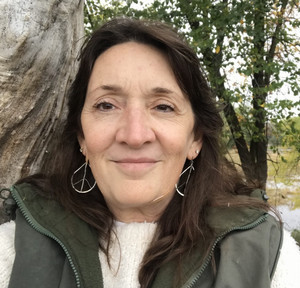
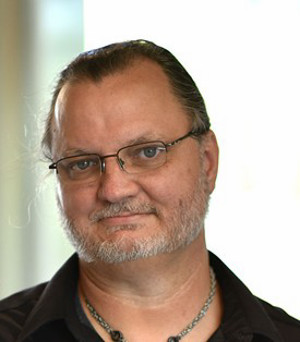
Evaluating Advanced AI Tools Teaching and Learning Utilization: A Cross-Disciplinary Assessment Framework
- Dr. Mary Clifford, Department of Criminal Justice College of Health and Wellness Professions
- Dr. Mark Gill, Executive Director AI Viz Lab
Meet the 2025-26 Recipients
Past Recipients
2024-25
Dr. Jen Atteberry Dr. Amy Hilleren
SCSU Department of Nursing Sciences, College of Health and Wellness Professions
Nurturing Success: Implementing a Study Skills and Support Program for First Semester Nursing Students
2023-24
Dr. Younsook Yeo
Social Work, College of Health and Wellness Professions
"How to create a dynamic learning environment that fosters a sense of belonging while also maintaining academic rigor, achievement, and knowledge"
2023-24
Dr. Matthew Davis, Dr. Matthew Julius, Dr. Angela McDonnell, and Dr. Jennifer Lamb
Biological Sciences, College of Science and Engineering
"Innovating the Classroom for Widespread Engagement"
2022-23
Dr. Odessa Luna and Dr. Michele Traub
Community Psychology, Counseling, and Family Therapy
"Teaching Ethical, Professional, and Culturally Humble Behavior through Situational Role Play and Feedback"
2021-22
Dr. Grama N. Rangamani and Dr. Mili M. Mathew
Communication Sciences and Disorders
"A Chain-Mentoring Model–Empowering Students for Academic Success, Leadership, and Wellness"
Miller Scholar Recognition 2021-2022
Miller Scholar Presentation from 2022 Provost Summit
2020-21
Dr. Michael Dando
English
"Remixing Wakanda: Critical Multimodal Literacies through Afrofuturistic Design Studies"
2019-20
Dr. Bruce Jacobson, Dr. Nate Bruender, Dr. Sarah Petitto and Greg Jorgensen
College of Science and Engineering, SCSU Online
"Escape Rooms: Assessment Tools Tom Sawyer Could Appreciate"
See project details here
2018-19
Dr. Steven McCullar
College of Education and Learning Design
Kelly Jameson
Herberger Business School
"Infusing Cultural Differences into Complex Real Estate Projects"
2017
Dr. Benjamin Witts
College of Health and Wellness Professions
"Applying Coursework to Enhance the Collegiate Experience for Underserved Populations at SCSU"
Watch the presentation here
Dr. Nancy Sundheim and Dr. Eric Little
College of Science and Engineering
"Online Laboratory Experience"
Watch the presentation here
- Read the news story
- Watch the Dr. Regan Gurung - Keynote Speaker's presentation here
2016
Dr. Kate Pound and Dr. Kristin Bratt
College of Science and Engineering
"The Poetry of Place: Pedagogy & Anthology"
Dr. Matthew Julius, Dr. Bill Gorcica and Mark Gill
College of Science and Engineering, School of the Arts
"Seeing the Unseeable"
- Read the news story