School Counseling
Master of Science
School Counseling M.S.
Our mission is to prepare ethical, reflective, and culturally responsive counselors who serve diverse communities with competence, advocacy, and integrity across clinical mental health and school counseling settings.
Student Learning Outcomes
- Ethical & Professional Identity: Ethical maturity, a clearly developed counselor professional identity, and accountability in counseling decision-making consistent with ACA ethical standards and applicable professional guidelines.
- Cultural Humility & Advocacy: Cultural humility, social awareness, and equity-centered counseling practice for people across all identities and social locations.
- Applied Clinical and Professional Counselor Competence: Developmentally appropriate, trauma and evidence-informed counseling, facilitation, and professional practice skills across modalities, settings, and service delivery systems.
- Developmental & Theoretical Integration: Integration of counseling theory and developmental, systemic, and multicultural knowledge into case conceptualization and culturally responsive intervention planning.
- Assessment & Data-Informed Practice: Ethical and accurate use of assessment tools and research evidence to inform client-centered counseling and programmatic decisions.
- Reflective & Experiential Learning: Reflective practice and ongoing professional development through supervised clinical experience-integrating self-awareness, feedback, and wellness into their emerging counselor identity.
Quick Links
CACREP Accreditation
 The School Counseling program at St. Cloud State University is accredited by the Council for Accreditation of Counseling and Related Educational Programs (CACREP) under 2016 standards. The accreditation runs through October, 2026.
Program Highlights
Mission and Objectives
Mission
To empower future counselors with knowledge, skills, and empathy to transform lives and promote mental health and well-being across diverse communities.
Program Objectives
Whether you are specializing in Clinical Mental Health Counseling or School Counseling, all of our counseling students are assisted in meeting the following program objectives.
- Cultural Responsiveness & Ethics: students will demonstrate cultural fluency, trauma-informed awareness, and ethical decision-making across diverse contexts.
- Evidence-Based & Developmentally Appropriate Practice: all students will demonstrate the ability to apply evidence-based, holistic counseling strategies to support growth in personal, social, academic, relational, and career domains.
- Communication & Counseling Relationships: all students will demonstrate the ability to communicate effectively and build strong, supportive counseling relationships with clients, students, families, and communities.
- Collaboration & Advocacy: all students will demonstrate the ability to collaborate with interdisciplinary professionals, educators, and systems to foster resilience, equity, and optimal development.
- Innovation, Leadership & Professional Identity: all students will demonstrate the ability to integrate research, technology, leadership, and advocacy into professional practice to meet evolving mental health and educational needs.
Program Features
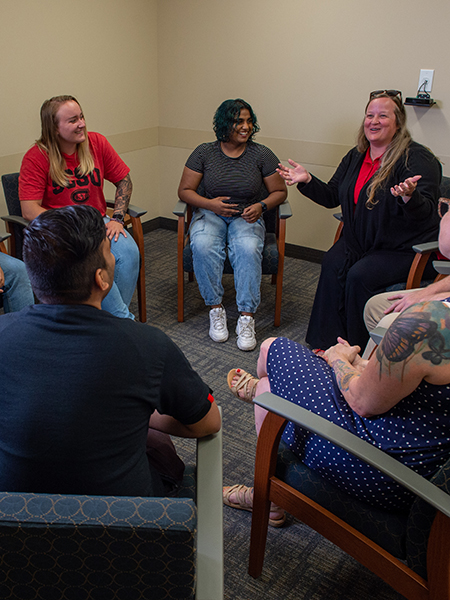 Our faculty members employ a variety of applied learning and instructional methods.
We require extensive clinical training, with an emphasis in social justice and cultural fluency. Students are trained to integrate those practices in their work with individual, family and group counseling.
Our students' experiences include:
- Three-semester practicum in individual and advanced group counseling which is unique in the region
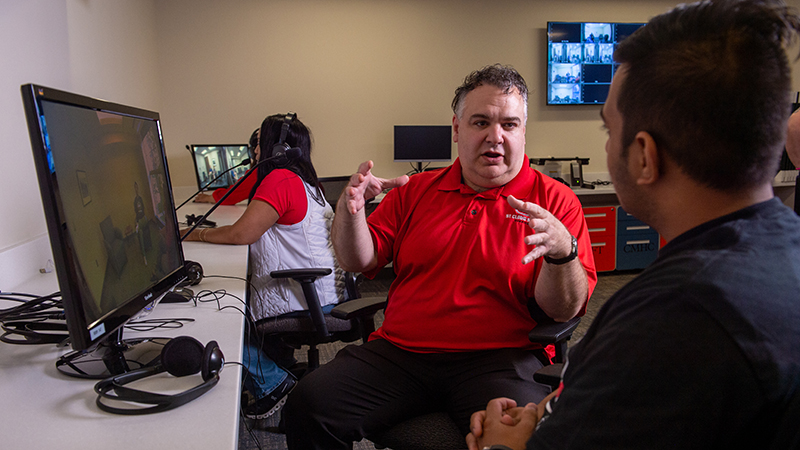
- Live-supervised in-house practicum training
- Hands-on approach learning in all courses
- Students currently serve as an overflow for our Counseling & Psychological Services (CAPS) at the University.
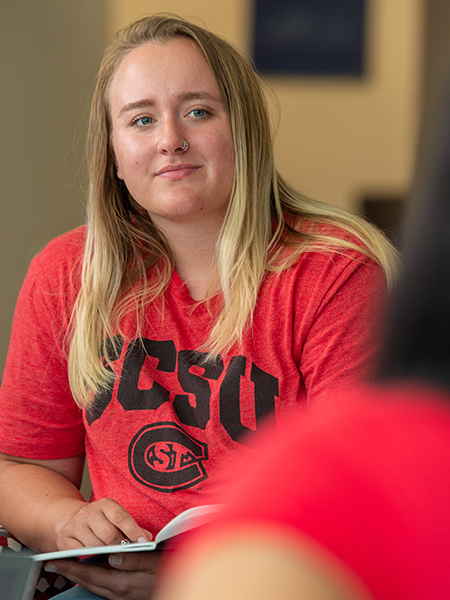 Our program emphasizes strength-based models of human development from a culturally competent lens. The faculty incorporate a variety of theoretical approaches including classical and contemporary counseling theories, systemic frameworks, multicultural and social justice perspective that align to Association for multicultural Counseling 7 Development (AMCD) – multicultural & social justice counseling competencies. Students gain experience in mindfulness-based approaches, integrated health, holistic wellness and prevention models.
Unique program strengths:
- Faculty are trained in motivational interviewing, mindfulness-based stress reduction, PREPARE/ENRICH couples work, and in eye movement desensitization and reprocessing.
- Faculty have competencies in culturally fluent pedagogy and clinical practice.
- Students are trained in evidence-based therapies that align with the DSM-5/ICD-10 classification.
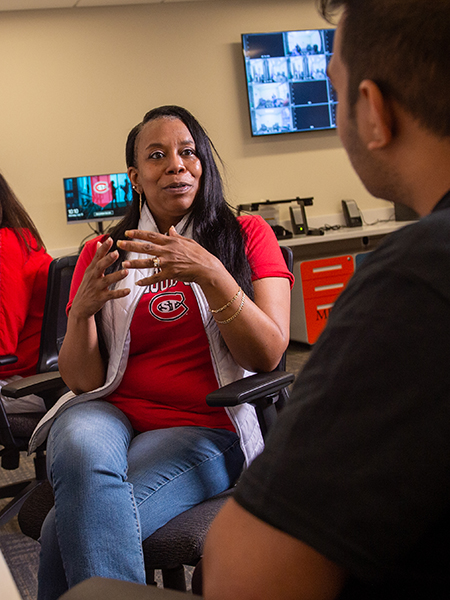 Our program instills the knowledge, concepts, and skills of trauma-informed therapy in our students’ learning and clinical training. Our faculty continue to advance in the trauma-informed therapy to better prepare our students for future challenges in trauma work.
- Faculty are currently collaborating with CentraCare and Stearns County with the Trauma Informed Care Program called Adverse Childhood Experiences. (ACE)
- Faculty have training in eye-movement desensitization and reprocessing, trauma-focused cognitive behavioral therapy, dialectical behavior therapy, prolonged exposure therapy, etc.
- Faculty are involved in scholarly work related to crisis and trauma work with children, adults and couples
- Faculty are involved in trauma training to prepare clinicians who will work with trauma in refugee populations.
- We instill knowledge and clinical skills of trauma-informed therapy in student learning
- Faculty are certified in the question, persuade, refer (QPR) method and provide training to students in suicide prevention
- Faculty are certified in Mental Health First Aid (MHFA) to provide services to individuals in needs
- Faculty receive training in Trauma-Focused Cognitive Behavior Therapy (TF-CBT)
- We incorporate advances in neuroscience and attachment theories
- Students are trained in trauma work, which focuses on:
- culturally informed practices with communities of color, refugee, immigrant, and LGBTQ population
- sexual trauma (childhood sexual abuse, rape, secondary trauma as it relates to boarder violence, and military sexual trauma)
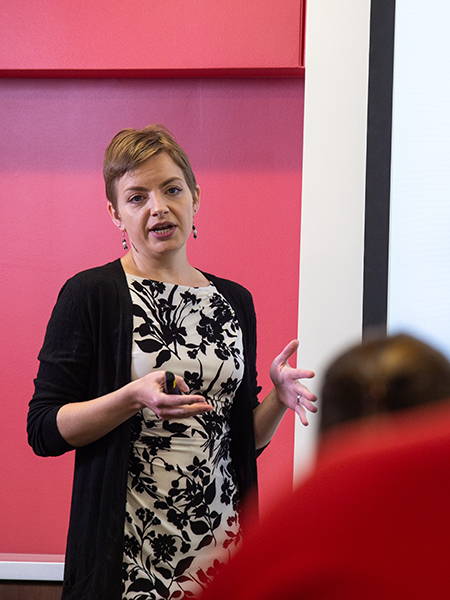 Our courses are well designed for didactic and applied learning. In the classroom, students will explore situational factors, address learning goals for each course that meet CACREP and licensure board standards, and receive assessment results at several points throughout each course. An evidence-based course design, developed by Dr. Dee Fink, has been adopted to guide the program course design and to promote significant learning in Clinical Mental Health Counseling (CMHC) training.
Integrated course design (ICD) exposes students to a variety of learning activities that enhance the integration of material from the classroom into applied clinical practice.
Integrated course design includes:
- Students read course content materials and video learning before class meeting.
- Students apply course content through experiential learning during class time.
- Students participate in collective assessment formats and team-based learning.
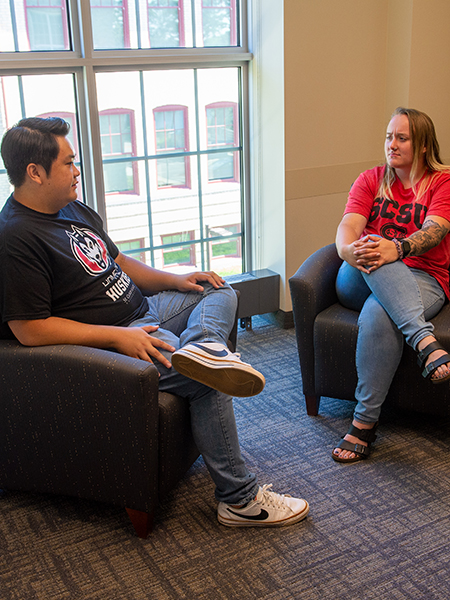
The school counseling program has a long and proud history of wonderful community partnerships with Minnesota school districts and agencies. Throughout your program of study, we help you connect with area schools and school counselors to build your professional network which ultimately helps you gain an internship site and employment. Talk to our faculty regularly about where you hope to work and they type of school you think you would be most interested in.