Center for Policy Research and Community Engagement
Connecting Research to Community Impact
The Center for Policy Research and Community Engagement (CPRCE) provides regionally-focused research into important questions of policy for the public, non-profit and private sectors of greater Minnesota. Our work coordinates research assets of SCSU in academic units across campus, seeking opportunities for policy research and community-focused activity for faculty, staff and students by building teams on demand for our community partners.
CPRCE is a strategic asset for the Office of the President to bring high-leverage opportunities in the community to the president’s attention at appropriate times. Demand for presidential attention in the community is high at a time when internal needs are paramount; the core team gives the president a 360 degree view of community needs. The Center is also able to respond to community needs for policy research by drawing on all of the university’s resources.
The Center for Policy Research and Community Engagement provides independent, evidence-based economic and policy research for Central Minnesota. The center does not create advocacy content for active political, legal, or public policy matters and discloses relevant research relationships when commenting on related issues. Read the full advocacy statement.
Our Services
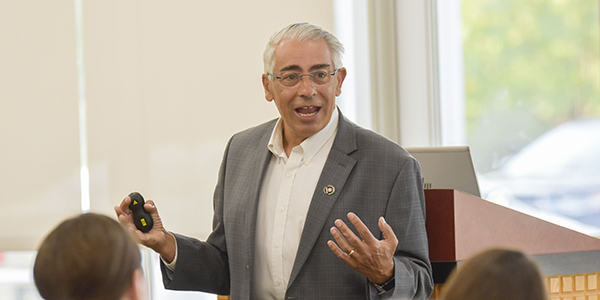
Presentations
CPRCE offers expert presentations on regional and national economic trends, workforce and community issues, providing research-based insights for businesses, organizations and public audiences.

Economic Impact Studies
CPRCE analyzes the economic impact of businesses, projects and events, using industry-standard modeling to measure how they support jobs, spending and economic growth in the region.

Market Studies
CPRCE provides market analysis and research to help communities, businesses and developers understand customer demand, spending patterns and economic opportunities for informed decision-making.
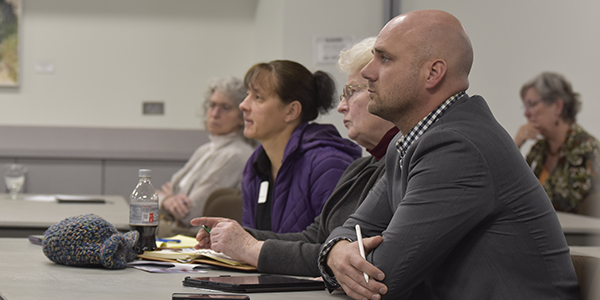
Meetings and Conferences
CPRCE brings together employers, nonprofits, government leaders and university experts to address regional challenges through research-informed discussions, collaborative problem-solving and actionable recommendations.
Cycle of Engagement

Engage Community

Produce Research

Educate Stakeholders

Support Advocates

Evaluate Results/Changes

Repeat Cycle
Project Highlight: Minnesota District Judges' Salaries
A report prepared by Fawad Ali and Dr. King Banaian on behalf of the Minnesota District Judges Association examines the challenges faced by Minnesota's judiciary due to salary adjustments that have not kept pace with inflation or rising salaries in the legal market.
The authors analyze the impact of stagnant wages on judicial recruitment and retention, highlighting how these factors have contributed to increased turnover and difficulties attracting qualified candidates.
Through a comparison with salaries in both the public and private sectors, the report underscores the need for significant salary adjustments to maintain the competitiveness of judicial positions and ensure the continued effectiveness and stability of Minnesota's judiciary.
Contact Us

A Statement on Advocacy Work
The Center for Policy Research and Community Engagement produces applied economic and policy research for central Minnesota, and its director and staff share that work publicly on a regular basis — through the Quarterly Business Report, ongoing regional economic commentary, and the center's other established channels. That work is evidence-based, methodologically transparent, and clear about the assumptions and data behind it.
The center does not produce partisan content nor will the center produce advocacy content on request — letters to the editor, testimony, or op-eds arguing a position in an active lawsuit, ballot question, or candidate race — regardless of who asks. Where CPRCE has a current or recent paid or sponsored-research relationship with an organization, it discloses that relationship before commenting publicly on that organization's projects; where a center-affiliated person serves on a public board or committee with authority over a matter, the center defers to that body's own process rather than commenting independently.
This isn't a reluctance to engage with difficult regional questions — CPRCE researches and writes about them regularly. It's a commitment to keeping that work independent of any one party's stake in the outcome, which is what makes it useful to the communities, policymakers, and institutions that rely on it.